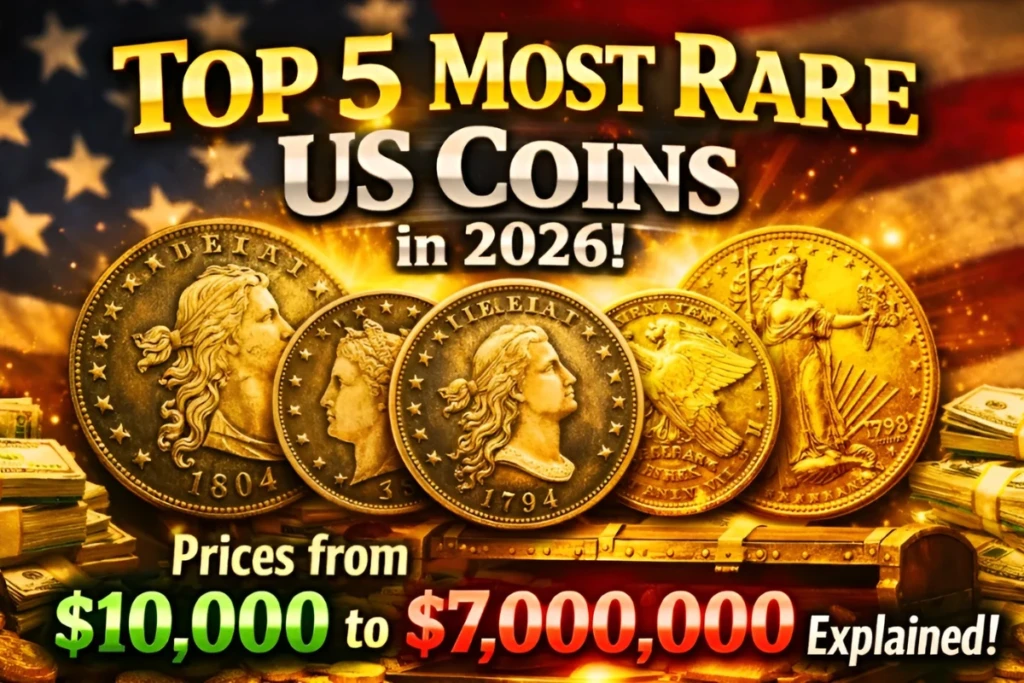
Top 5 Most Rare U.S. Coins in 2026 represent some of the most precious and historically significant specimens of American currency. Rare coins capture the attention of collectors, historians, and investors alike, as they combine historical significance with extreme rarity.
Some of these coins exist in such limited numbers that only a handful of specimens remain, transforming them into artifacts worth millions of dollars. Their rarity is typically attributed to limited production runs, minting errors, or unusual historical circumstances that render them unique among U.S. coinage.
The Significance of Rare Coins
Rare coins are not merely collectible items; rather, they are fragments of national history preserved in metal. Each coin reflects a specific era of American economic development, artistic design, and minting technology.
Collectors often evaluate coins not solely based on their antiquity, but also on the basis of how many specimens remain in existence today. When production numbers were low—or when coins were subsequently melted down—the surviving specimens became exceptionally valuable and highly sought-after.
The Flowing Hair Dollar
The 1794 ‘Flowing Hair Silver Dollar’ is widely regarded as the first official silver dollar issued by the United States government. Following the establishment of the national mint in the 1790s, it marked the inception of federal coinage production.
Because it was minted in very limited quantities—and very few coins remain in excellent condition today—this coin is extremely rare. One renowned specimen sold at auction for over $10 million, underscoring the immense demand for it among collectors.
The Liberty Head Nickel
The 1913 ‘Liberty Head Nickel’ stands as one of the most enigmatic coins in American history. This coin was produced in extremely limited numbers and is considered a U.S. It was never officially authorized by the Mint, a fact that only heightens its mystique.

Today, only five specimens of this coin are known to exist. Due to its rarity and fascinating backstory, collectors have paid millions of dollars for individual specimens at auction.
The Draped Bust Dollar
The 1804 ‘Draped Bust Silver Dollar’ is often referred to as the “King of American Coins.” Despite bearing the date 1804, many of these coins were actually minted decades later to serve as diplomatic gifts for foreign dignitaries.
Today, fewer than twenty specimens of this coin are known to exist, making it extremely rare. Several specimens have sold for millions of dollars, underscoring its significance in both the realms of American history and numismatics.
The Mystery of the Barber Dime
The 1894-S Barber Dime is another renowned and rare coin among collectors. Initially, only 24 coins were minted at the San Francisco Mint, and today, only a handful of these are known to survive.
Due to its extremely limited mintage and mysterious origins, this coin has become one of the most celebrated dimes ever struck in the United States. High-quality specimens have fetched prices exceeding one million dollars at auction.
The Saint-Gaudens Double Eagle
The 1933 Saint-Gaudens Double Eagle features one of the most intriguing stories in the history of American coinage. When the United States abandoned the Gold Standard during the Great Depression, orders were issued to melt down nearly all of these $20 gold coins.

A few surviving coins escaped the melting pot, rendering them incredibly rare today. Whenever such a coin enters the market, it often sells for millions of dollars due to its historical significance and extreme rarity.
Rare Coin Values
| Coin Name | Year | Known Examples | Approximate Auction Value |
|---|---|---|---|
| Flowing Hair Silver Dollar | 1794 | About 120–130 known | Up to $10 million+ |
| Liberty Head Nickel | 1913 | 5 known | Around $4–5 million |
| Draped Bust Silver Dollar | 1804 | About 15–16 known | Up to $7 million+ |
| Barber Dime (San Francisco) | 1894 | About 9 known | Over $1–2 million |
| Saint-Gaudens Double Eagle | 1933 | Extremely limited | Over $7 million |
These prices fluctuate based on the condition of the coin and the prevailing auction environment. Coins in pristine condition often command significantly higher prices compared to those that are worn or damaged.
Rarity and Market Trends
Over the past few decades, the market for rare coins in the United States has experienced steady growth. Wealthy collectors and investors view rare coins as both historical artifacts and assets capable of retaining their value over the long term.
Auction houses regularly host events where rare coins fetch prices in the millions of dollars—a testament to the immense demand for them among collectors. Coins that possess both historical significance and extreme scarcity often command the highest prices at these auctions.
The Impact of Historical Significance
Many of America’s rarest coins are deeply intertwined with pivotal moments in U.S. history. Shifts in monetary policy, economic crises, or early coinage experiments often resulted in the creation of coins that were produced for only a brief period before being discontinued.
When these coins survive into the modern era, they become historical treasures. Their value appreciates not only due to their rarity but also because they represent significant chapters in the evolution of American currency.
Growing Collector Demand
Coin collecting remains a popular hobby throughout the United States. Millions of Americans engage in numismatics—ranging from casual hobbyists to serious investors actively seeking out rare coins.
The rarity of coins such as the 1794 Dollar or the 1913 Nickel has elevated them to legendary status within the world of coin collecting. Even collectors who may never realistically hope to acquire these coins still study and admire them as milestones in the history of American coinage.
The Influence of Auction Prices
Auction sales play a pivotal role in determining the market value of rare coins. When a renowned coin comes up for auction, competitive bidding can drive its price far beyond previous estimates.
These record-breaking sales often capture global attention and influence the entire market for rare coins. Consequently, the value of America’s most famous coins continues to rise steadily as collectors vie with one another to acquire the few remaining specimens.