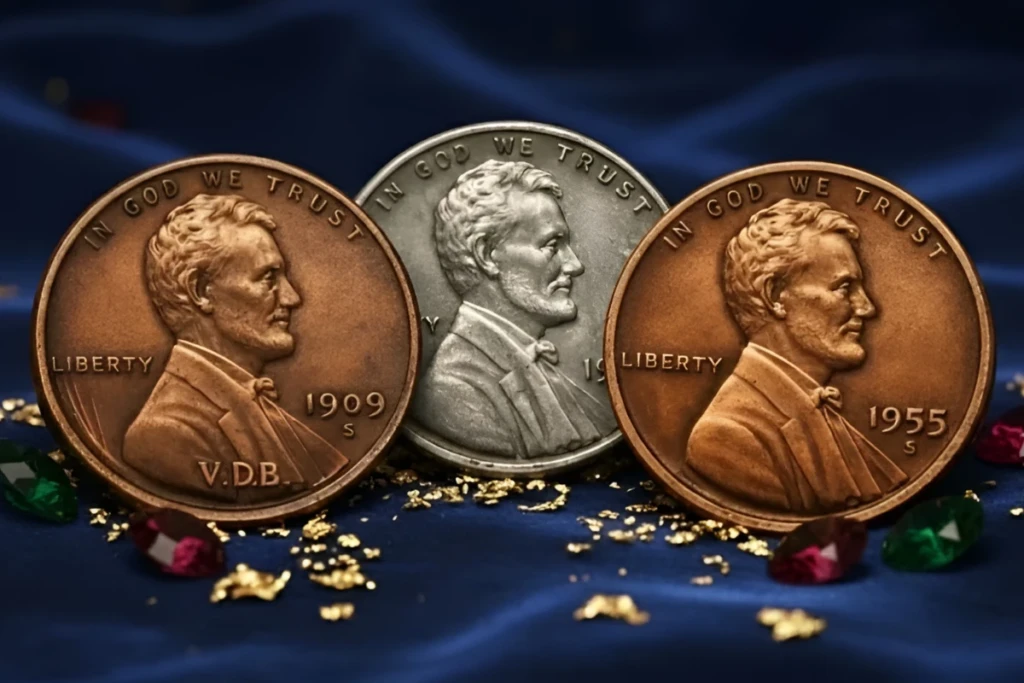
1955 Doubled Die Penny Value represents one of the most fascinating stories in American coin collecting. This famous Lincoln wheat cent gained legendary status because of a striking minting error that created clear doubling in the lettering and date. Today, collectors view the coin as one of the most recognizable error coins in U.S. numismatic history, with values ranging from a few thousand dollars to well over one hundred thousand depending on condition.
Historical Mint Error
The 1955 doubled die penny was created during the hubbing process used to produce coin dies at the Philadelphia Mint. During production, a working die received two impressions from the hub that were slightly misaligned, causing the design to appear doubled on coins struck from that die.
This doubling is most visible on the date “1955” and on the inscriptions “LIBERTY” and “IN GOD WE TRUST,” which appear strongly duplicated to the naked eye. The dramatic visual effect makes the coin instantly recognizable and explains why collectors consider it one of the most famous mint errors ever produced in U.S. coinage.
Circulation Discovery Story
Unlike many rare coins discovered decades later, the 1955 doubled die penny entered circulation almost immediately. Estimates suggest that around 20,000 to 24,000 of these error coins were released into the public money supply before the mistake was noticed.
Many of the coins appeared in cigarette vending machines and pocket change across the United States during the mid-1950s. Because collectors quickly recognized the unusual doubling, the penny rapidly gained popularity among hobbyists, establishing its reputation as a classic American coin error.
Surviving Coin Population
Although tens of thousands of coins may have originally been struck, far fewer survive today in collectible condition. Experts estimate that only about 10,000 to 15,000 examples remain, with many showing heavy wear from circulation.

The limited surviving population plays a major role in the coin’s value. Because most examples were used in everyday transactions, high-grade specimens are extremely difficult to find, and collectors often compete intensely when well-preserved coins appear in auctions or certified collections.
Coin Design Details
The 1955 doubled die penny belongs to the Lincoln wheat cent series, which was produced from 1909 through 1958. The coin features Abraham Lincoln on the front and two wheat stalks on the reverse, a design created by sculptor Victor David Brenner.
These coins were struck in bronze and contain about 95 percent copper with small amounts of tin and zinc. The penny measures roughly 19 millimeters in diameter and weighs approximately 3.11 grams, specifications typical for mid-twentieth-century Lincoln cents.
Collector Market Value
The value of a 1955 doubled die penny depends largely on its physical condition and color grade. Coins that circulated heavily show wear and sell for significantly less than uncirculated examples with original luster. Even so, the coin maintains strong demand across all condition levels.
Typical collector prices can exceed $1,000 even for circulated coins, while well-preserved examples may reach several thousand dollars or more. High-grade pieces with minimal wear and bright copper color command the highest premiums in the numismatic market.
Auction Price Records
At the top end of the market, exceptional examples have reached remarkable prices in major coin auctions. A certified Mint State example graded MS65+ Red sold for approximately $114,000, demonstrating the intense collector demand for premium specimens.
In some cases, even higher prices have been recorded when coins appear with exceptional preservation or strong eye appeal. The combination of rarity, historical significance, and dramatic doubling makes the coin one of the most sought-after pieces in the Lincoln cent series.
Condition Price Table
The following table shows approximate market ranges based on typical coin grades and condition levels. Actual values may vary depending on certification, color designation, and auction demand.
| Condition Grade | Typical Value Range (USD) |
|---|---|
| Good (G-4) | $900 – $1,100 |
| Fine (F-12) | $1,000 – $1,300 |
| Very Fine (VF-20) | $1,300 – $1,800 |
| Extremely Fine (XF-40) | $1,800 – $2,500 |
| About Uncirculated (AU-50) | $2,500 – $3,500 |
| Mint State (MS-63) | $4,000 – $6,000 |
| Mint State High Grade (MS-65+) | $10,000 – $100,000+ |
These ranges demonstrate how dramatically condition influences coin value. Even small improvements in grade can result in significant increases in price due to the scarcity of well-preserved examples.
Famous Error Recognition
The strong doubling on the coin is what makes the 1955 doubled die penny so famous among collectors. Unlike minor mint errors that require magnification, this variety shows clear duplication visible with the naked eye.

Because of this visual clarity, the coin has become one of the most widely recognized error coins in American numismatics. Collectors often describe it as the “classic doubled die” example and a key coin for anyone interested in mint error history.
Long Term Value
Over the decades, the value of the 1955 doubled die penny has steadily increased as coin collecting grew in popularity. As surviving coins move into long-term collections, fewer examples appear on the open market each year.
This limited availability continues to support strong prices. Many numismatic experts consider the coin a cornerstone of the Lincoln wheat cent series and a historical reminder of how small minting mistakes can create legendary collectibles.
Numismatic Legacy
Today the 1955 doubled die penny stands as one of the most iconic coins in American history. Its dramatic error, intriguing discovery story, and relatively small surviving population make it an enduring symbol of the excitement found in coin collecting.
More than seventy years after its accidental creation, the coin still captures the imagination of collectors across the United States. What began as a simple minting mistake has become one of the most celebrated and valuable pennies ever produced.