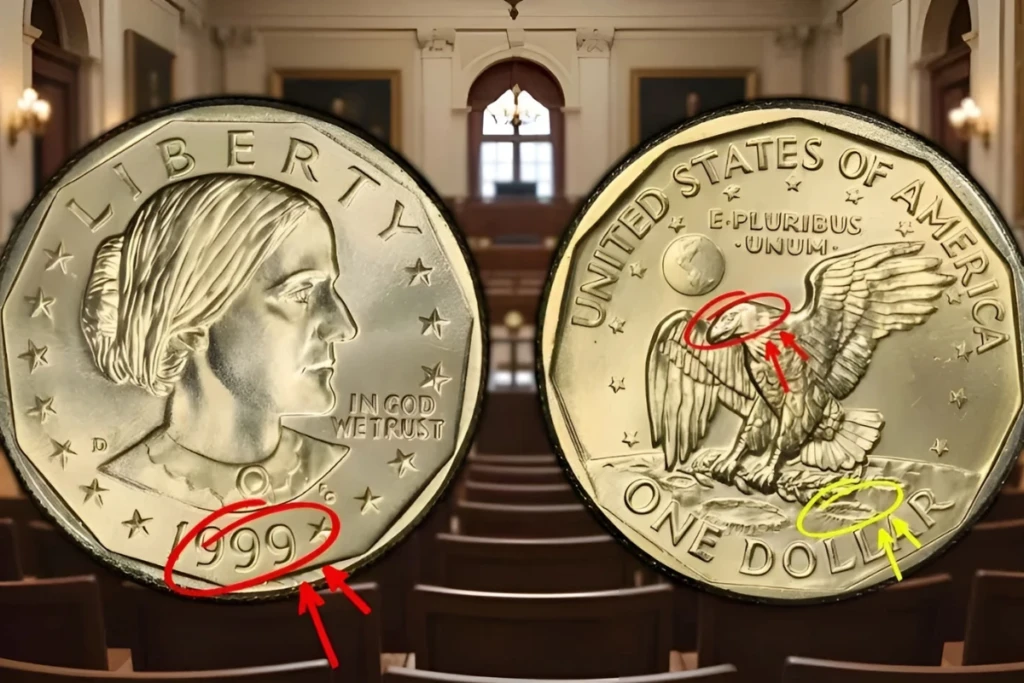
The 1999-P Susan B. Anthony Dollar stands as one of the most discussed modern U.S. coins, owing to its unique production history and its sudden resurgence after nearly two decades. Minted at the Philadelphia Mint, this coin marks the final year of the Susan B. Anthony Dollar series. Although it was once widely circulated, today this coin holds historical significance and possesses moderate value for collectors.
Background of the Coin Series
The Susan B. Anthony Dollar series was launched in 1979, when the United States attempted to introduce a smaller dollar coin into everyday circulation. This coin replaced the larger Eisenhower Dollar and featured a portrait of women’s rights leader Susan B. Anthony on its obverse side.
However, the public did not widely embrace it, as the coin closely resembled the “quarter” in both size and color. This confusion led to a decline in its circulation, and regular production ceased after 1981; only limited quantities continued to be minted specifically for collectors.
The Year of the Sudden Return
In the late 1990s, the U.S. government faced a shortage of dollar coins required for use in vending machines, transportation systems, and postal equipment. Since the upcoming “Sacagawea Dollar” was still in its developmental phase, the Mint temporarily revived the Susan B. Anthony design.
Consequently, the 1999-P Susan B. Anthony Dollar was produced as a short-term solution. This sudden return created a unique situation in which a coin design from the early 1980s suddenly resurfaced nearly twenty years later.
The Philadelphia Mint Mark
The “P” mint mark indicates that this coin was struck at the Philadelphia Mint, one of the oldest and most significant coin-minting facilities in the United States. Historically, coins from Philadelphia did not always bear a mint mark; however, by 1999, the inclusion of the “P” mark on circulating coinage had become standard practice.
Coins struck at this mint were distributed widely across the country. Consequently, the 1999-P Susan B. Anthony Dollar became the most commonly encountered coin among those issued in 1999.
Coin Design Details
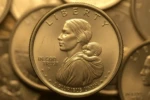
The design of the 1999-P Susan B. Anthony Dollar remained consistent with earlier coins in this series. The obverse (front) of the coin features a portrait of Susan B. Anthony, a prominent figure in the American women’s suffrage movement. The reverse (back) depicts an eagle landing on the moon while holding an olive branch. This imagery was inspired by the insignia of the Apollo 11 mission and symbolizes American technological achievement and peaceful exploration.
Physical Characteristics
This coin was designed with specific physical characteristics intended to distinguish it from coins of other denominations. Despite these efforts, its resemblance to the “quarter” coin remained one of the primary reasons it struggled to gain traction in circulation.
A table is provided below, detailing the key physical characteristics of the 1999-P Susan B. Anthony Dollar.
| Feature | Specification |
|---|---|
| Year | 1999 |
| Mint | Philadelphia (P) |
| Composition | 91.67% Copper, 8.33% Nickel |
| Diameter | 26.5 mm |
| Weight | 8.1 grams |
| Edge | Reeded |
| Designer (Obverse) | Frank Gasparro |
| Designer (Reverse) | Frank Gasparro |
These specifications remained identical to those of the series’ previous editions, thereby ensuring compatibility with vending machines and automated systems.
Production Figures
The production figures for the 1999-P Susan B. Anthony Dollar reflect the significant demand for dollar coins in circulation at that time. The Philadelphia Mint struck tens of millions of coins to rapidly meet the nationwide demand.
Compared to earlier years of the series, the production volume in 1999 was substantially higher. This massive production run means that most coins from this year remain relatively common, even after having spent time in circulation.
Impact of Circulation History
When this coin entered circulation in 1999, it quickly alleviated a temporary shortage in the supply of dollar coins. Businesses that relied on automated machinery benefited significantly from the availability of these coins.
Despite its utility in automated systems, the coin failed to gain widespread popularity among the general public. Many Americans continued to prefer using paper dollar bills rather than carrying coins of the same monetary value.
Transition to the Sacagawea Dollar
The return of the Susan B. Anthony dollar in 1999 proved to be short-lived. In 2000, the United States Mint introduced the Sacagawea dollar, featuring a golden hue designed to distinguish it clearly from the quarter and prevent any confusion.

With this transition, the Susan B. Anthony series effectively came to an end. Consequently, the 1999 edition is regarded as the final chapter in the history of this particular coin.
Collector Interest Today
Although the 1999-P Susan B. Anthony Dollar is not considered a particularly rare coin, collectors nonetheless find it historically significant. As the coin issued during the final year of the series’ circulation, it holds a distinct place in the history of modern U.S. coinage. Coins in better grades—particularly those retaining a good luster and showing minimal wear—attract significant attention among collectors. Coins that never entered circulation are often carefully preserved within coin albums or mint sets.
Historical Significance
The Susan B. Anthony dollar series holds a significant place in American cultural history, as it was the first U.S. circulating coin to feature the likeness of an actual woman. This historical milestone rendered the series symbolically profound, extending its significance far beyond its mere economic function.
The 1999-P edition carries this legacy forward, marking the final instance in which coins bearing this specific design were utilized in everyday transactions. Consequently, this modern coin remains a key reference point for both contemporary coin collectors and historians.