The rare $9.8 million Kennedy half dollar has become one of the most fascinating stories in coin collecting today. The idea that a small fifty-cent coin could be worth millions captures the imagination of collectors, historians, and ordinary Americans alike.
While most Kennedy half dollars are generally pocket money, some extremely rare versions have become iconic. Their value stems from a combination of historical significance, limited minting conditions, and unique physical characteristics that set them apart from the millions of regular coins produced each year.
The Coin’s Historical Origin
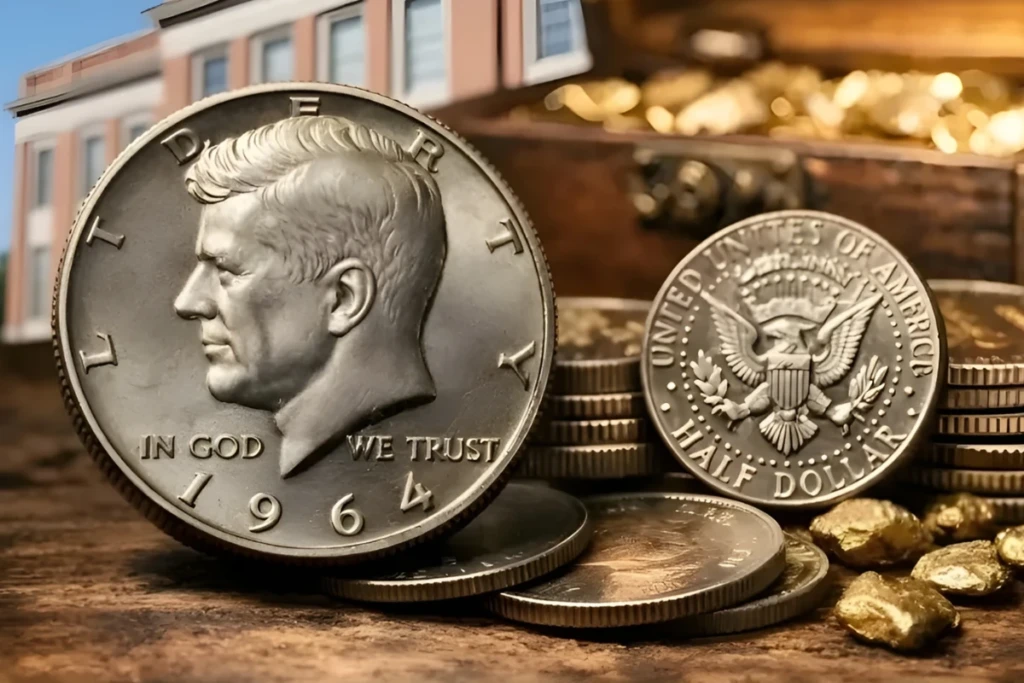
The Kennedy half dollar was first struck in 1964, shortly after the assassination of President John F. Kennedy. The United States Mint created this coin as a tribute to the late president, replacing the long-standing Franklin half dollar that had been in circulation since 1948.
The new coin was in high demand, and millions of Americans saved them as souvenirs rather than spending them. This immediate popularity created a unique situation where many coins were treasured, yet some rare variations emerged during the initial production period.
Composition and Design
The original 1964 Kennedy half dollar was composed of 90 percent silver, giving it both true metal value and collector appeal. Later issues reduced the silver content, eventually leading to the copper-nickel composition used today.
The coin’s design features a portrait of President Kennedy on the obverse, created by sculptor Gilroy Roberts. The reverse, designed by Frank Gasparro, features the presidential seal, depicting an eagle holding an arrow and an olive branch, symbols of strength and peace.
Mintning Variations Explained
Rare Kennedy half dollars often result from unusual minting conditions that occurred during production. Minor imperfections in the die, experimental strikes, or limited-run proof coins can significantly increase a coin’s rarity and value.
Collectors pay close attention to small details like mint marks, strike quality, and die variety. Even minor differences in lettering or spacing can identify a coin as part of a rare subset produced under specific conditions at the mint.
Record Valuation Story
The $9.8 million Kennedy half dollar illustrates how extreme rarity and collector demand can drive coins far beyond their original denomination. In the world of high-end numismatics, a unique specimen can generate strong bidding from wealthy collectors and investors.
When a collector believes a coin is the finest or rarest known example, the price can skyrocket. Historical significance, perfect condition, and verified authenticity often combine to generate very high valuations in the auction market.
Auction Market Dynamics
The rare coin market works similarly to the art market, where rarity and provenance strongly influence value. Coins featured in major auctions sometimes set new records because collectors recognize they may never get another chance to own that particular piece.
Auction houses carefully authenticate and grade coins before offering them to buyers. Certified grading helps build trust in the market, allowing collectors to confidently invest large sums in historically significant pieces.
The Importance of Coin Grading
Professional grading services evaluate coins using a standard scale that measures preservation and strike quality. A Kennedy half dollar graded in near-perfect condition can be significantly more valuable than the same coin with visible wear.

Small imperfections, such as scratches, dull luster, or a weak strike, can also impact the final grade. For very rare coins, even a single grade difference can be worth millions of dollars.
Increasing Collector Demand
Interest in the Kennedy half dollar has steadily increased over the past few decades because it connects modern American history with collectible currency. Unlike many older coins, these coins remain familiar, giving them emotional appeal.
Young collectors often begin their hobby with Kennedy half dollars because they are easier to identify than older historical coins. As knowledge increases, collectors begin to seek out rare variations and better-grade specimens.
Rare Coin Data
Below is a simple comparison of several specific Kennedy half dollar categories that impact rarity and collector value.
| Coin Type | Year Range | Composition | Typical Rarity Level | Collector Interest |
|---|---|---|---|---|
| First Issue Strike | 1964 | 90% Silver | Moderate | Very High |
| Silver Reduced | 1965–1970 | 40% Silver | Moderate | High |
| Clad Circulation | 1971–Present | Copper-Nickel | Common | Moderate |
| Proof Coins | Various Years | Varies | Low Production | High |
| Special Error Strikes | Limited Years | Varies | Extremely Rare | Exceptional |
The table illustrates how changes in production and composition affect rarity levels, which collectors closely monitor.
The Impact of Cultural Symbolism
Beyond monetary value, the Kennedy half dollar represents an important cultural moment in American history. This coin symbolizes the nation’s attempt to honor a president whose leadership left a profound impact on the nation.

Because of this emotional connection, this coin remains popular even among those who do not actively collect coins. Its presence in collections, drawers, and memorabilia sets reflects the deep cultural memory associated with the Kennedy era.
Current Discovery Stories
Sometimes, stories emerge of rare coins being unexpectedly discovered in places like inherited collections, old bankrolls, or forgotten coin jars. While most discoveries are commonplace, the possibility of finding something rare continues to excite collectors.
These discovery stories fuel public curiosity about coins and often inspire people to explore their collections. The prospect of finding a valuable variation sustains the interest of generations of hobbyists.
Numismatic Legacy Value
The story of the rare $9.8 million Kennedy half dollar illustrates how everyday currency can transform into a historical artifact. Over time, coins become markers of cultural events, economic changes, and artistic designs.
As collectors continue to study Mint records and examine surviving coins, new insights may emerge about rare variations. Each discovery adds another chapter to the evolving legacy of one of America’s most renowned coins.